
ARES, Amateur Radio Emergency Services®, is a national organization to support the community in emergencies and for events such as parades and races. It is part of the ARRL® The National Association for Amateur Radio® which has been in existence since 1914 soon after the beginning of wireless radio. ARRL and ARES promote ham radio so this essential use of the radio waves can be available for the public at almost no cost.
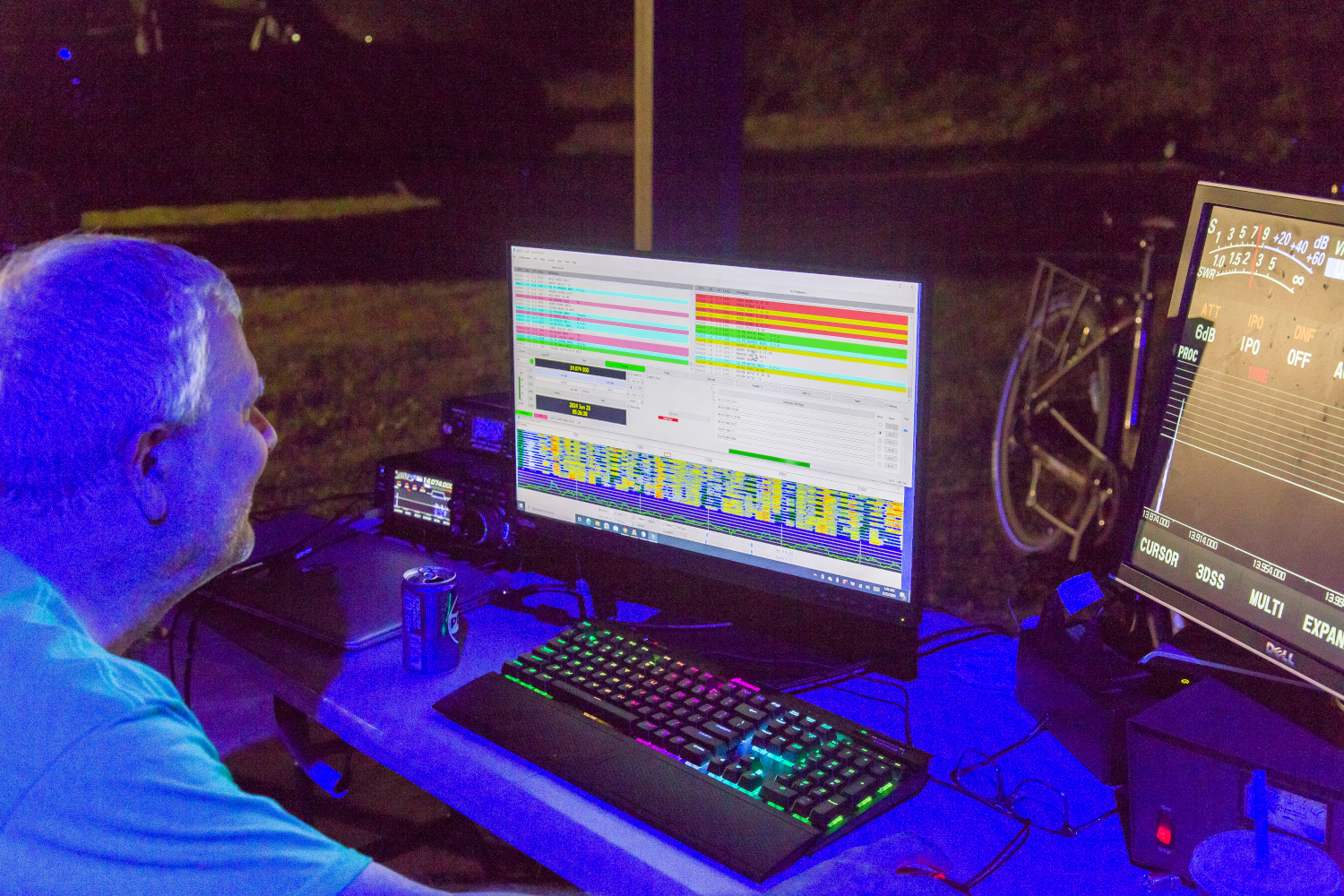 ARES has monthly meetings for training and planning on the 4th Wednesday of the month at 7pm. Location varies check the calendar. We train on directed voice nets, digital modes such as Fldigi and Winlink, support parades and bike ride communications, and partiipate in EMA exercises. The 2m radios in the DelCo EOC allows the EMA to monitor our communications. And NIMS trained operators are allowed in the DelCo EOC when activated to streamline the information flow to authorities. We endeavor to support the EMA in multiple ways beyond ham radio by helping out in the DelCo EOC during exercises and other activities such as phone support.
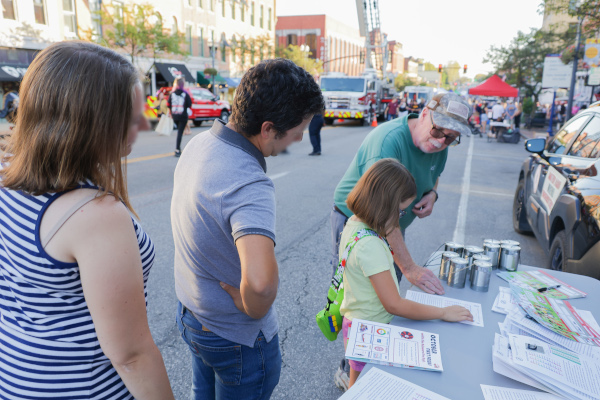 Besides the work above, ARES also does community outreach such as Delaware 1st Friday, teaching ham radio to students and veterans.
Several sites are supported by ARES, one at the  Red Cross and shared with the DELARA club.
Another site is in the Delaware DelCo EOC has two VHF radios equiped with Fldigi and Winlink. The last site is the repeater N8DCA 145.19 (tone 123.0) which has batterry backup.
Red Cross and shared with the DELARA club.
Another site is in the Delaware DelCo EOC has two VHF radios equiped with Fldigi and Winlink. The last site is the repeater N8DCA 145.19 (tone 123.0) which has batterry backup.
Anyone can join the Delaware ARES group. Russ Fling is the Emergency Coordinator (EC). However, there are levels to the membership:
- Unlicensed people can join the DelARES group, but they cannot operate on the air. There are portentially some support roles they can play but they are limited. You can learn about ARES and we will help you get your license.
- Licensed amateur radio operators are also welcome, but they will have limited ability to interact with government agencies.
- Trained amateurs radio operators have taken courses to learn the basics of National Incident Management System (NIMS). This is how the government agencies operate and communicate. The basic courseas are IS-100, IS-200, IS-700, and IS-800. Many more are available. More detail available on request.
- Everyone is encouraged to be a member of ARRL. The EC role (and others such as the District Emergency Coordinator, DEC,) must be a member and more courses are required.
There are many opportunities to take a test to be licensed. You don't have to be a technical wizard but most can't pass without some training. It is not just technical, you will also learn the responsibilities of being a ham and how to operate. There are books and online courses such as HamStudy (or just search for "ham license course and books", there are many). Other hams are always eager to support you as well!